Newsletter · Issue 5 · 6 November 2026
Where does it begin? Chromosomes, first movements and age of onset
Where does a psychiatric condition begin? This issue looks at three kinds of beginning: an underrecognized difference in the sex chromosomes, movement patterns in infancy, and the age at which depression first appears. In the neuroscience corner, the question runs the other way: how does a single magnetic pulse given over the scalp reach individual neurons deep in the brain?
This week's studies
BReviewBiological Psychiatry2026
Sex chromosome aneuploidies: one in 400, and underrecognized in psychiatry
Integrative review of epidemiological, behavioral, neuroimaging and genomic studies
DetailsClose
Finding
Loss or gain of one or more X or Y chromosomes affects about 1 in 400 people, and this review brings together the latest epidemiological, behavioral, neuroimaging and genomic work. Relative to their prevalence, these conditions show a penetrance across several psychiatric diagnoses that often exceeds that of better-recognized genetic risk factors, with substantial symptom burden below diagnostic thresholds. They have large effects on overall brain size and reshape regional anatomy, and the regional effects of X and Y dosage are strikingly correlated. Genomic studies point to X-Y gametologs as highly dosage-sensitive genes that may shape wider effects on gene expression.
Why it matters
Common enough to be met in clinic, these conditions deserve more attention in their own right, and the authors also propose them as genetics-first models for broader psychiatry. They call for new registries built in close partnership with families.
Limitation
A narrative review that generates no new data, and its abstract gives no pooled estimates.
Pavlinek A, Davis S, Ingason A, et al. Sex Chromosome Aneuploidies and the Brain: from Neurodevelopmental Risk to Fundamental Biology. Biological Psychiatry. 2026. doi:10.1016/j.biopsych.2026.10.021
BSystematic reviewEuropean Child & Adolescent Psychiatry2026
What early movement patterns say about later ADHD
19 studies from 1,469 records
DetailsClose
 Atlas
Finding
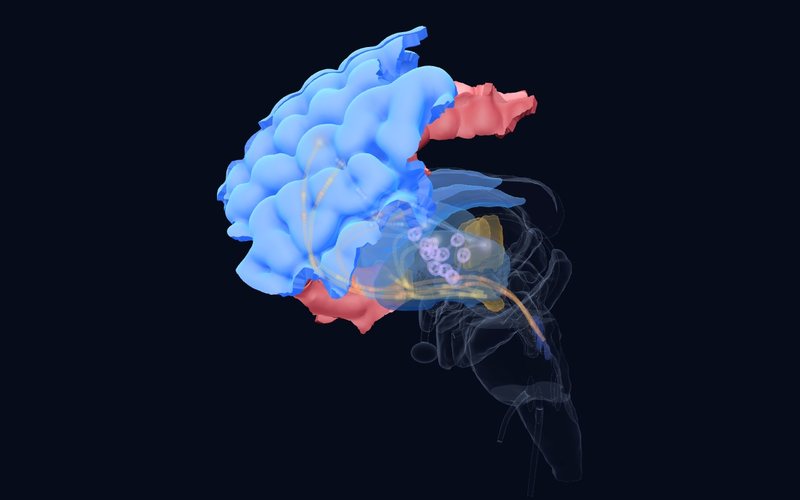
This PRISMA systematic review examined how early motor activity relates to later ADHD traits or diagnosis; 19 of 1,469 records qualified, using actigraphy or accelerometry, parent or multi-informant reports, or a combination. Across methods, heightened or poorly regulated early activity was consistently associated with later ADHD traits or diagnosis, with signals detectable from infancy and toddlerhood. A subset of studies instead linked motor delays or other motor atypicalities to later ADHD traits. Multi-informant and multi-modal approaches generally gave the most robust signal.
Why it matters
It suggests that early motor behaviour could be a useful thread in developmental follow-up, and that both too much and too little movement can matter. The authors also note that the field leans on deficit-focused language and diagnosis-only endpoints, and argue for dimensional frameworks.
Limitation
Its abstract gives no effect sizes, and these associations do not make early activity a diagnostic marker.
Ruffer HC, Jones EJH, Meaburn EL. Infancy & early childhood motor activity levels as predictors of attention-deficit/hyperactivity disorder: a systematic review of cross-sectional and longitudinal studies. European Child & Adolescent Psychiatry. 2026. doi:10.1007/s00787-026-03235-9
CCross‑sectional studyPsychological Medicine2026
Youth-onset and adult-onset depression do not draw the same map
ENIGMA cortical thickness patterns with connectome, neurotransmitter, transcriptome and mitochondria atlases; no participant count in the abstract
DetailsClose
 Atlas
Finding
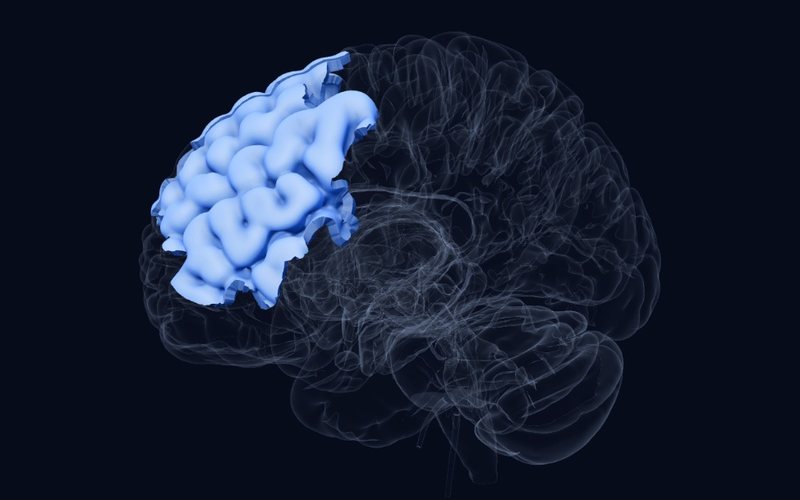
The authors took ENIGMA patterns of cortical thickness change in youth-onset and adult-onset major depression and compared them with the structural connectome and with neurotransmitter, gene expression and mitochondrial atlases. The connectome constrained the changes in both groups, more strongly in adult onset. The likely epicentres differed: the lateral prefrontal cortex in youth onset, and the orbitofrontal cortex with the anterior and middle cingulate gyrus in adult onset. Links to gene categories and mitochondrial features appeared only in adult onset.
Why it matters
It adds a biological angle to the idea that age of onset is a key source of heterogeneity in depression. The prefrontal epicentre in youth is worth reading alongside the late maturation of this region; that link is our interpretation, not the authors'.
Limitation
An analysis of group-level maps and reference atlases rather than of individual patients, so it cannot show cause or apply to a single person.
Xu S, Cui S, Shi X, et al. Neurobiological factors related to differential cortical abnormalities in youth-onset and adult-onset major depressive disorder. Psychological Medicine. 2026. doi:10.1017/s0033291726105777
CExperimental studyProceedings of the National Academy of Sciences (PNAS)2026
The pulse reaches deep: single neurons under TMS
4 neurosurgical patients, 185 single neurons
DetailsClose
 Atlas
Finding
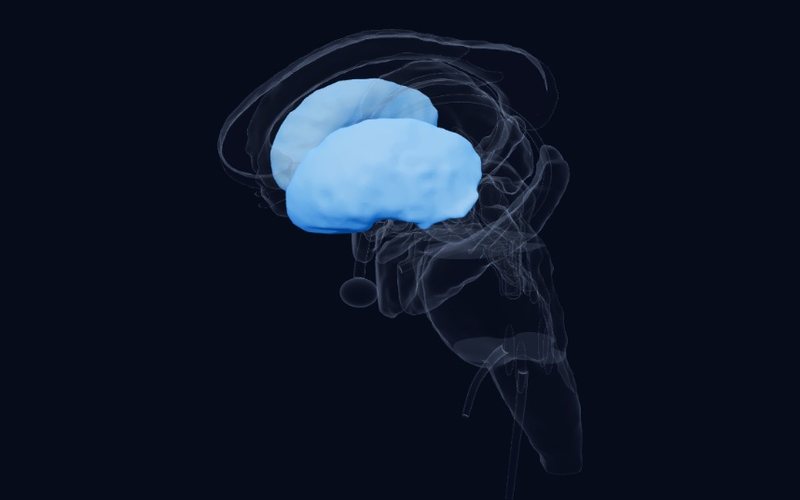
In four neurosurgical patients, 185 single neurons were recorded through intracranial microelectrodes while single pulses of TMS were given to the left dorsolateral prefrontal cortex. Forty-six percent of the neurons responded in a time-locked way (26% facilitated only, 19% suppressed only, 1% both), in deep cortical and subcortical structures on both sides, including the putamen and thalamus. Putative inhibitory striato-thalamic neurons tended to increase firing from about 8 ms, peaking at about 80 to 100 ms. Putative excitatory neurons and limbic areas were suppressed on a slower time course lasting up to about 1,000 ms.
Why it matters
It offers a candidate cellular mechanism for an established depression treatment: raising the firing of inhibitory neurons in executive control networks while suppressing limbic excitatory drive. It also shows at the level of single cells how a superficial cortical target can reach deep structures.
Limitation
Only four patients and single pulses rather than the repeated protocols used in treatment; the network-level finding rests on one participant.
Dickey CW, Hassan U, Kawasaki H, et al. Transcranial magnetic stimulation to the dorsolateral prefrontal cortex modulates single-neuron activity in humans. Proceedings of the National Academy of Sciences (PNAS). 2026. doi:10.1073/pnas.2610803123
Structure of the week
Brainstem
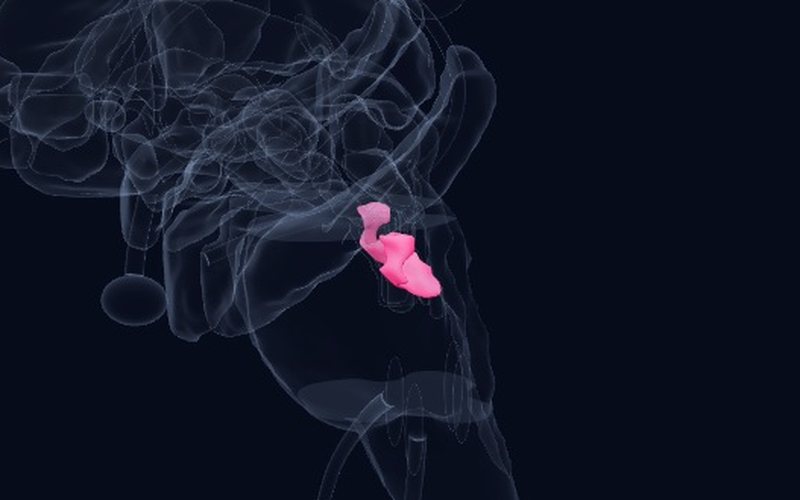
Parabrachial Complex
The crossroads for danger signals from the body: relays visceral, taste, pain, temperature and breathlessness information to the amygdala, hypothalamus and insula.
From the book
That the PFC matures so late anatomically justifies the book’s child and adolescent psychiatry axis: almost the whole developmental line described in this book is really the story of when, and how far, the PFC can regulate the primitive systems.
— The Green Walnut on the Couch, Chapter 20: Neuroanatomical Correlation (Turkish original: Divandaki Yeşil Ceviz)
A question for readers
When a family worries about a very active baby, what do you tell them: that it is worth watching, or that it is too early to talk about ADHD?
You can send your answer by email:
[email protected]References
- Pavlinek A, Davis S, Ingason A, et al. Sex Chromosome Aneuploidies and the Brain: from Neurodevelopmental Risk to Fundamental Biology. Biological Psychiatry. 2026. doi:10.1016/j.biopsych.2026.10.021
- Ruffer HC, Jones EJH, Meaburn EL. Infancy & early childhood motor activity levels as predictors of attention-deficit/hyperactivity disorder: a systematic review of cross-sectional and longitudinal studies. European Child & Adolescent Psychiatry. 2026. doi:10.1007/s00787-026-03235-9
- Xu S, Cui S, Shi X, et al. Neurobiological factors related to differential cortical abnormalities in youth-onset and adult-onset major depressive disorder. Psychological Medicine. 2026. doi:10.1017/s0033291726105777
- Dickey CW, Hassan U, Kawasaki H, et al. Transcranial magnetic stimulation to the dorsolateral prefrontal cortex modulates single-neuron activity in humans. Proceedings of the National Academy of Sciences (PNAS). 2026. doi:10.1073/pnas.2610803123
This newsletter is for education and is not medical advice; consult your doctor for diagnosis and treatment decisions. The summaries are written in our own words from the studies' abstracts and open-access full texts; see the article itself for details and definitive results.
Level of evidence (as in the atlas): A large consortium, meta-analysis or regulatory decision; B replicated studies or classic case; C single or pioneering study. Preprints have not been peer reviewed.