Newsletter · Issue 7 · 20 November 2026
In the moment: from sub-second dopamine to same-day stress
Some of what shapes a young mind happens in less than a second, some within a single day, some over weeks of practice. This issue moves across those timescales: how much exercise it takes to sharpen executive function in ADHD, how a hard day with peers travels with self-harm thoughts on the same day, how the gaze of autistic children drifts from the crowd, and a dopamine signal shorter than a second that teaches young animals to play.
This week's studies
AMeta‑analysis, systematic reviewMolecular Psychiatry2026
How much movement helps executive function in ADHD? Exercise type and dose
40 RCTs; 1,563 children and adolescents with ADHD
DetailsClose
 Atlas
Finding
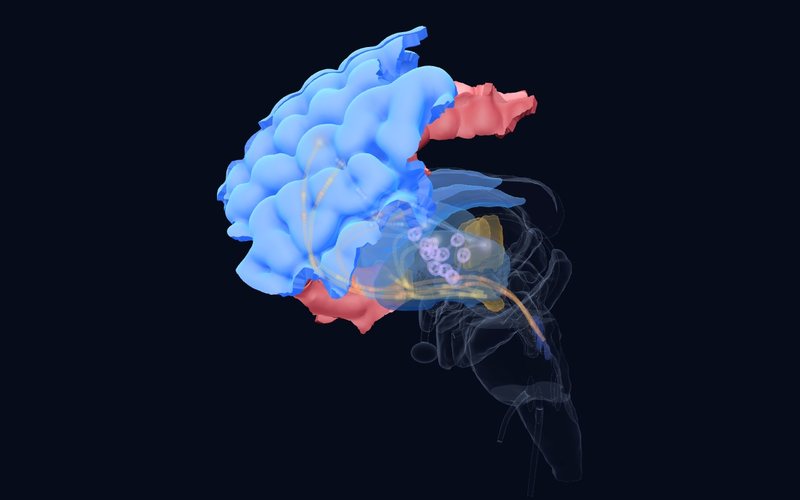
The authors pooled 40 randomised trials in 1,563 children and adolescents with ADHD that tested exercise on three executive functions: working memory, inhibitory control and cognitive flexibility. In the network analysis, mind-body exercise ranked highest for working memory (SUCRA 94.9), while combat sports ranked highest for inhibitory control (93.4) and cognitive flexibility (92.5). The dose-response analysis found a positive, non-linear relation between total exercise and all three domains, with an estimated minimum effective dose of about 1,200 MET-min per week for working memory, 340 for inhibitory control and 280 for cognitive flexibility.
Why it matters
Families often ask whether sport helps with ADHD, and which kind. This analysis gives a first answer by type and amount, with executive functions as a measurable target for support beyond medication.
Limitation
SUCRA rankings are probabilities drawn largely from indirect comparisons, and the abstract does not report the certainty of the evidence.
Hou X, Gong L, Zheng Y, et al. Comparative effects of various exercise types and doses to improve executive function in children and adolescents with attention deficit hyperactivity disorder: a systematic review with pairwise, network, and dose-response meta-analyses. Molecular Psychiatry. 2026. doi:10.1038/s41380-026-03943-3
CCohort studyDevelopment and Psychopathology2026
Same-day stress, same-day risk: peers, family and self-harm thoughts
154 girls aged 12–17; 73.4% at high risk for self-injurious thoughts and behaviours; 30 days of ecological momentary assessment
DetailsClose
 Atlas
Finding
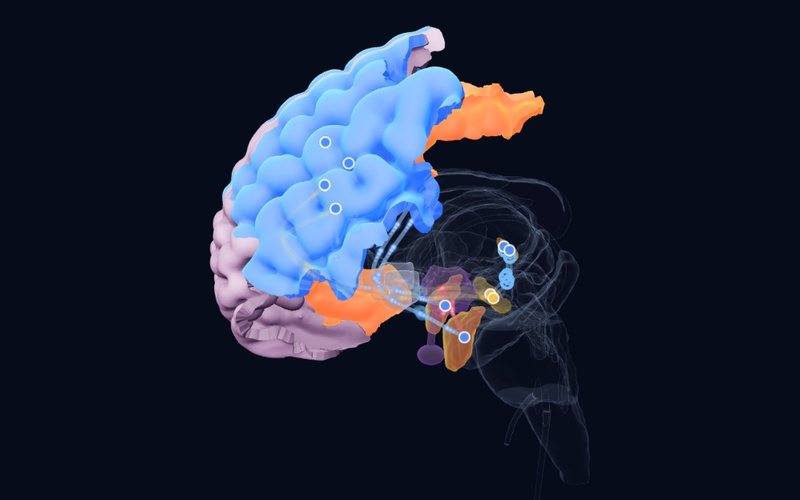
For 30 days, 154 adolescent girls, most of them at high risk, reported their interpersonal experiences and self-injurious thoughts in real time. On days with more peer stress, both urges for non-suicidal self-injury and suicidal ideation were higher, whereas family stress went with self-injury urges only. Neither kind of stress predicted self-injurious thoughts on the following day. In exploratory models the link also ran the other way: self-injury urges predicted more peer and family stress the next day.
Why it matters
Risk rose and fell within the same day rather than building up over days. The authors see a case for brief, real-time interventions delivered at the moment of interpersonal stress.
Limitation
Only girls took part, most of them at high risk, and same-day associations cannot show which came first.
James KM, Griffith JM, Hutchinson EA, et al. Day-to-day peer and family stress as proximal correlates of self-injurious thoughts during adolescence. Development and Psychopathology. 2026. doi:10.1017/s0954579426102144
CCross‑sectional studybioRxiv2026Preprint
Autism and ADHD together: differences in gaze do not simply add up
2,476 children and adolescents from the Healthy Brain Network (1,186–2,042 per video); autism-only group 45–78 per video
DetailsClose
 Atlas
Finding
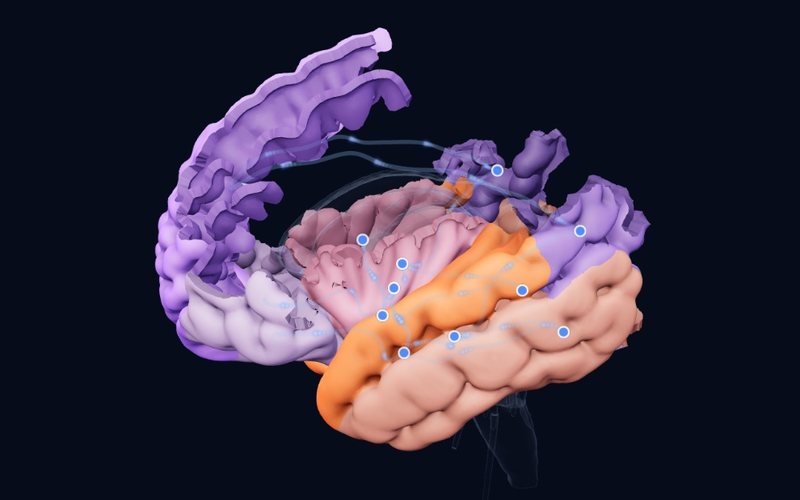
While children watched four videos, the authors measured how closely each child's gaze followed that of typically developing peers. An autism diagnosis was linked to lower gaze synchrony in all four videos (β −0.78 to −0.45 SD), and autistic traits predicted it independently of ADHD traits in three. In three videos the autism × ADHD interaction was positive (β 0.46 to 0.65): when ADHD co-occurred, the reduction linked to autism was smaller, not larger. Ten simpler eye-movement measures from the same recordings showed no consistent group differences.
Why it matters
It is often assumed that two co-occurring conditions add up to more difficulty; on this objective measure the opposite was seen. The authors argue against additive models of autism and ADHD co-occurrence.
Limitation
A preprint, not yet peer reviewed; the autism-only group was small and the finding was not tested in an independent cohort.
Di X, Biswal BB. Attenuated gaze synchrony in autism and its non-additive modification by co-occurring ADHD: a transdiagnostic eye-tracking study of naturalistic viewing. bioRxiv. 2026. doi:10.64898/2026.05.11.724367 Preprint
CAnimal study, experimental studyCell2026
Play is learned through dopamine signals shorter than a second
Juvenile rats (wild type and Shank3-deficient autism model); no sample size in the abstract
DetailsClose
 Atlas
Finding
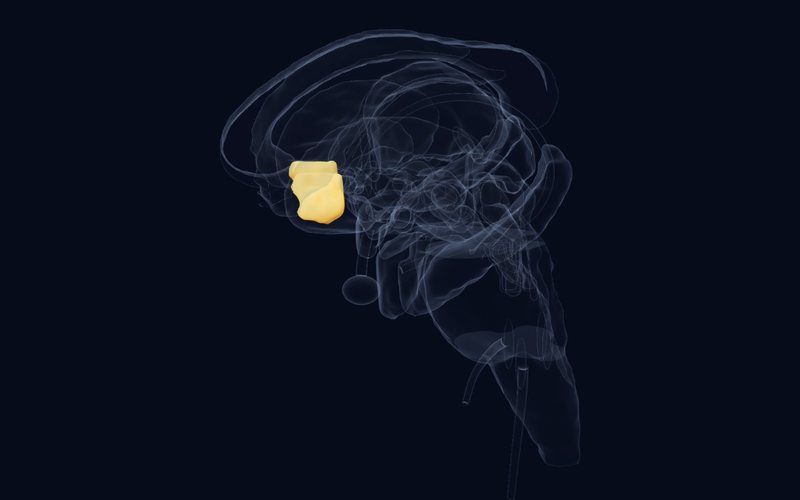
Using 3D pose tracking and unsupervised clustering of natural play between juveniles, the authors found that dopamine in the nucleus accumbens was tightly coupled to sub-second social "syllables". In Shank3-deficient autism models, dopamine responses to proactive play were abolished in males and reversed in sign in females, and a reinforcement learning model built on these disrupted signals reproduced the play deficits. Optogenetic stimulation of dopamine projections from the ventral tegmental area to the nucleus accumbens, timed to proactive play, restored reciprocal play in Shank3-deficient rats.
Why it matters
Play is one of the basic emotional systems in Panksepp's model; this study shows a moment-by-moment dopamine signal that teaches it and how an autism-linked gene can disturb it. Play returned when the dopamine signal was delivered in time with the play itself.
Limitation
The work was done in rodents; whether the same timing applies to children's play is untested.
Chen X, Tao X, Zhong Z, et al. Sub-second dopamine reinforcement shapes juvenile social play. Cell. 2026. doi:10.1016/j.cell.2026.10.040
Structure of the week
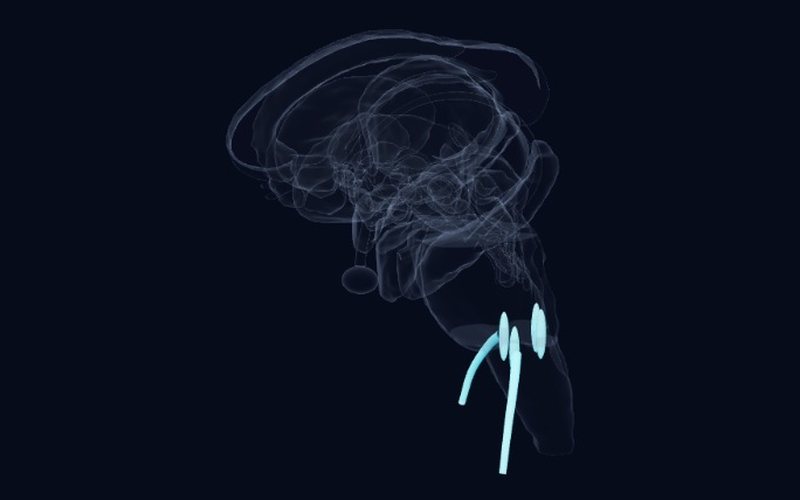
Brainstem
Vagal Nuclei
The two parasympathetic outputs in the medulla: the nucleus ambiguus, which regulates the heart and the muscles of the face and throat, and the dorsal motor nucleus…
A question for readers
Which kind of physical activity have you seen a child with ADHD keep up: team sports, martial arts, dance, yoga or something else?
You can send your answer by email:
[email protected]References
- Hou X, Gong L, Zheng Y, et al. Comparative effects of various exercise types and doses to improve executive function in children and adolescents with attention deficit hyperactivity disorder: a systematic review with pairwise, network, and dose-response meta-analyses. Molecular Psychiatry. 2026. doi:10.1038/s41380-026-03943-3
- James KM, Griffith JM, Hutchinson EA, et al. Day-to-day peer and family stress as proximal correlates of self-injurious thoughts during adolescence. Development and Psychopathology. 2026. doi:10.1017/s0954579426102144
- Di X, Biswal BB. Attenuated gaze synchrony in autism and its non-additive modification by co-occurring ADHD: a transdiagnostic eye-tracking study of naturalistic viewing. bioRxiv. 2026. doi:10.64898/2026.05.11.724367 Preprint
- Chen X, Tao X, Zhong Z, et al. Sub-second dopamine reinforcement shapes juvenile social play. Cell. 2026. doi:10.1016/j.cell.2026.10.040
This newsletter is for education and is not medical advice; consult your doctor for diagnosis and treatment decisions. The summaries are written in our own words from the studies' abstracts and open-access full texts; see the article itself for details and definitive results.
Level of evidence (as in the atlas): A large consortium, meta-analysis or regulatory decision; B replicated studies or classic case; C single or pioneering study. Preprints have not been peer reviewed.