Newsletter · Issue 8 · 27 November 2026
Early marks, long roads: from bullying to the slow maturation of new neurons
Some marks are laid down early and take years, even decades, to show. This issue follows four of them: bullying and the unusual perceptual experiences that travel with it, a psychosis course that often begins in childhood, an early stress that waits in a thalamo-amygdalar circuit until a later injury unmasks it, and young neurons whose slow maturation helps the hippocampus remember others.
This week's studies
BCohort studyJournal of the American Academy of Child and Adolescent Psychiatry2026
Bullying and psychotic-like experiences: a link that runs both ways
11,868 youth from the ABCD Study (age 9–10 at baseline, 21 US sites, 6 waves); bullying-discordant twin and sibling pairs
DetailsClose
 Atlas
Finding
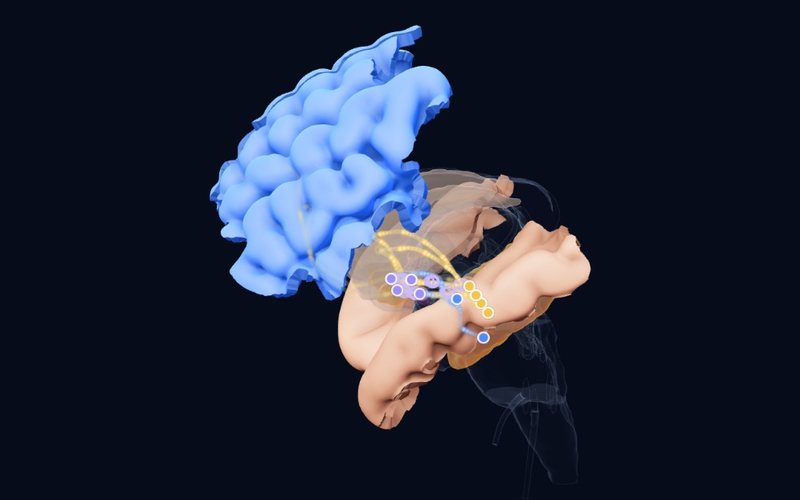
The authors followed 11,868 children from age 9–10 across six waves of the ABCD Study, with bullying reported by both caregivers and youth and distressing psychotic-like experiences measured by questionnaire. Being bullied was linked to higher odds of distressing psychotic-like experiences (OR 3.62, 95% CI 3.31–3.96), and over time the link ran both ways: bullying predicted later experiences, and the experiences predicted later bullying. Comparing twins and siblings who differed in bullying exposure showed both a shared familial contribution (OR 6.87) and an individual-specific environmental contribution (OR 2.55).
Why it matters
Bullying is common and preventable. Because part of the association held within families, the authors see bullying prevention and early recognition of affected children as a way to lower later psychiatric risk.
Limitation
Bullying and experiences were reported by caregivers and youth, and within-family comparisons reduce confounding but cannot remove it.
Karcher NR, Barch DM, Oh H, et al. Bullying Victimization and Youth Psychotic-Like Experiences: Evidence From a Longitudinal Discordant Twin and Sibling Design. Journal of the American Academy of Child and Adolescent Psychiatry. 2026. doi:10.1016/j.jaac.2026.11.009
BCohort studySchizophrenia Bulletin
Psychosis often begins long before the first admission
Suffolk County Mental Health Project: 593 people with first-admission psychosis (mean age 29.6; 57.7% male); 25-year follow-up
DetailsClose
Atlas
Finding
A representative sample of 593 people first admitted with psychosis was interviewed at admission and again at 6 months and 2, 4, 10, 20 and 25 years, with clinical stage rated from global functioning. In childhood only 25% were in stage 0, the lowest stage, while 60% were already in stage 1 and 15% in stage 2 or higher; a further 20% deteriorated by adolescence. At year 25 only 9% were in stage 0 and 25% had reached stage 4. Of those who began at stage 2, 72.5% ended in stage 3 or 4, and of those who began at stage 3 or 4, 83.6% did.
Why it matters
For most participants, loss of functioning was already visible in childhood, long before the first admission. Stage at onset strongly predicted the 25-year outcome, a case for recognising early impairment.
Limitation
The sample came from first hospital admissions, and staging rested on a single global functioning score.
Guinart D, Correll CU, Rubio JM, et al. Epidemiology of Staging Trajectories in Psychosis: From Childhood to Year 25 Post-Onset. Schizophrenia Bulletin. doi:10.1093/schbul/sbag179
CAnimal study, experimental studyScience2026
Early stress waits in a thalamo-amygdalar circuit
Female and male mice; no sample size in the abstract
DetailsClose
 Atlas
Finding
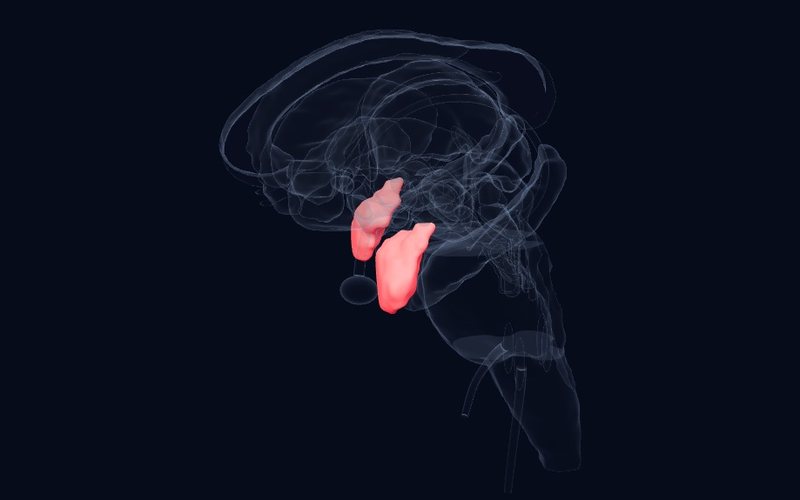
In mice, the authors combined early-life social isolation with a later nerve injury. Together, the two amplified activity-dependent synaptic gain and anticipatory recruitment of the pathway from the paraventricular thalamus to the central amygdala in females but not in males, and this female-specific sensitisation enhanced mechanical hypersensitivity and avoidance in adulthood. Chemogenetic inhibition of the pathway rescued these behaviours when stress and injury co-occurred, whereas sustained activation triggered hypersensitivity and phasic activation triggered avoidance.
Why it matters
Childhood adversity raises the risk of chronic pain and anxiety later in life, especially in women. The study proposes a hidden circuit state laid down by early stress that stays silent until a later injury unmasks it.
Limitation
The work was done in mice, and the abstract reports no sample sizes.
Borruto AM, Kohlund T, Rettig L, et al. A thalamo-amygdalar circuit drives female vulnerability to chronic pain after early-life stress. Science. 2026. doi:10.1126/science.adx5757
CAnimal study, experimental studyNature Neuroscience2026
Staying young for longer: new neurons and social memory
Mice; no sample size in the abstract
DetailsClose
 Atlas
Finding
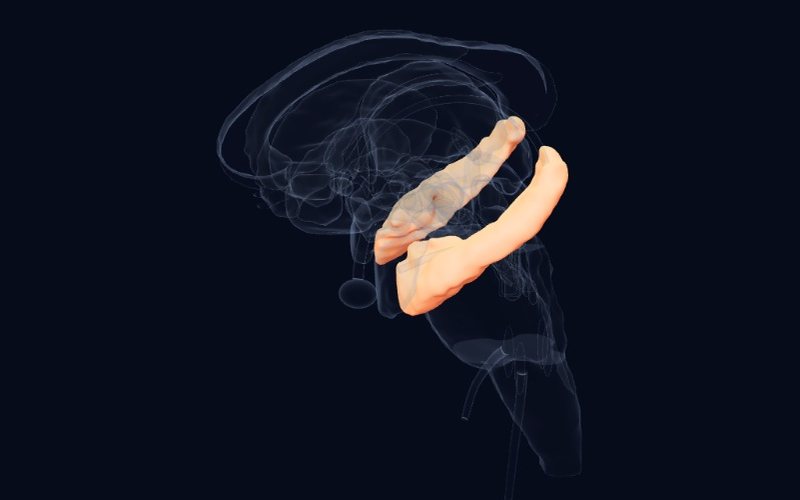
New granule cells are born in the dentate gyrus of the adult hippocampus, and their protracted maturation (neoteny) in higher mammals is thought to support plasticity. In mice, the authors synchronously expanded a cohort of 4-week-old immature adult-born cells, but not 8-week-old mature ones; this recruited fast-spiking parvalbumin interneurons in CA3 and CA2, increased feed-forward inhibition, reduced social memory interference and enhanced social memory consolidation. Sharp-wave ripples in CA1 and CA2 grew stronger and longer, and chemogenetic experiments showed that these interneurons were necessary and sufficient for social memory consolidation.
Why it matters
Staying immature for longer looks like a resource here: young neurons support memory by strengthening inhibition and the network rhythms of consolidation. The study ties slow maturation, the thread of this issue, to a concrete circuit.
Limitation
The work was done in mice, and the abstract reports no sample sizes.
Chung A, Alipio JB, Ghosh M, et al. Neotenic expansion of adult-born dentate granule cells reconfigures GABAergic inhibition to enhance social memory consolidation. Nature Neuroscience. 2026. doi:10.1038/s41593-026-02503-w
Structure of the week
Cerebellum
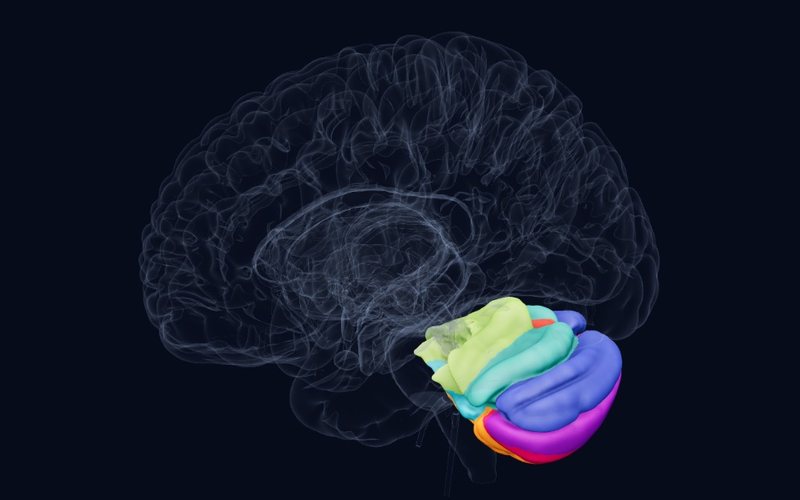
Cerebellum
Times and corrects movement, and applies the same computation to thought, language and emotion. Most of the brain’s neurons are here.
A question for readers
When a young person describes unusual perceptual experiences, do you routinely ask about bullying?
You can send your answer by email:
[email protected]References
- Karcher NR, Barch DM, Oh H, et al. Bullying Victimization and Youth Psychotic-Like Experiences: Evidence From a Longitudinal Discordant Twin and Sibling Design. Journal of the American Academy of Child and Adolescent Psychiatry. 2026. doi:10.1016/j.jaac.2026.11.009
- Guinart D, Correll CU, Rubio JM, et al. Epidemiology of Staging Trajectories in Psychosis: From Childhood to Year 25 Post-Onset. Schizophrenia Bulletin. doi:10.1093/schbul/sbag179
- Borruto AM, Kohlund T, Rettig L, et al. A thalamo-amygdalar circuit drives female vulnerability to chronic pain after early-life stress. Science. 2026. doi:10.1126/science.adx5757
- Chung A, Alipio JB, Ghosh M, et al. Neotenic expansion of adult-born dentate granule cells reconfigures GABAergic inhibition to enhance social memory consolidation. Nature Neuroscience. 2026. doi:10.1038/s41593-026-02503-w
This newsletter is for education and is not medical advice; consult your doctor for diagnosis and treatment decisions. The summaries are written in our own words from the studies' abstracts and open-access full texts; see the article itself for details and definitive results.
Level of evidence (as in the atlas): A large consortium, meta-analysis or regulatory decision; B replicated studies or classic case; C single or pioneering study. Preprints have not been peer reviewed.